Kerala has officially eradicated extreme poverty as of November 1, 2025, becoming the first Indian state to do so—thanks to a bold, community-driven governance model.
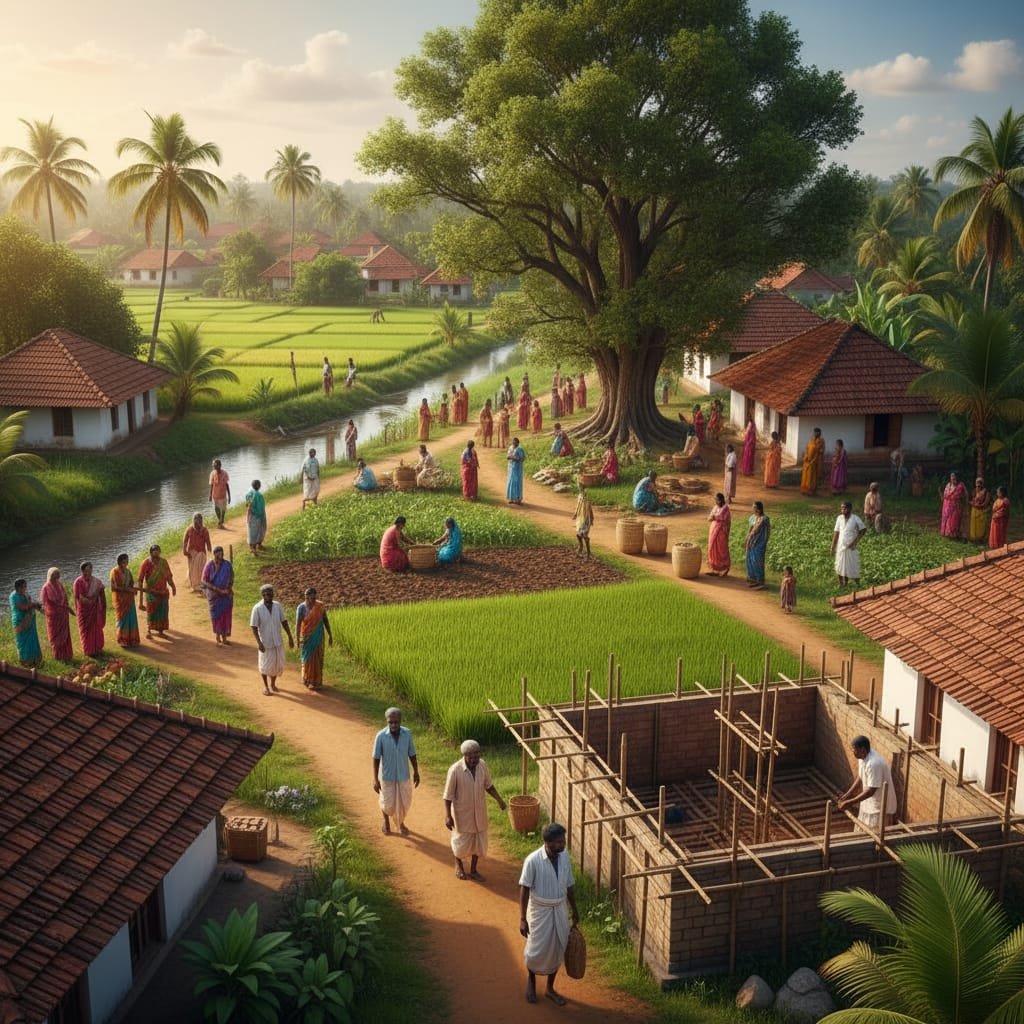
🌱 The Extreme Poverty Eradication Project (EPEP)
- Launched in 2021, the EPEP aimed to eliminate extreme poverty by November 2025—and it delivered on time.
- The initiative combined data-driven governance, local self-government empowerment, and scientific validation to identify and uplift the most vulnerable.
🏡 Community-Led Interventions
- Kerala’s success hinged on grassroots participation, especially through Kudumbashree, a women-led poverty eradication and empowerment program.
- Kudumbashree’s Ashraya project, started in 2007, laid the foundation by supporting underserved families via local bodies.
- Local governments were empowered to identify “invisible poor”—those who had slipped through traditional safety nets—and tailor interventions accordingly.
📊 Data-Driven Targeting
- The state conducted granular surveys to map deprivation across multiple dimensions: income, health, education, housing, and access to services.
- This allowed for precise targeting of aid and ensured that no household was left behind.
🧩 Multidimensional Poverty Approach
- Kerala adopted the World Bank’s updated poverty threshold of $3/day (2021 PPP), focusing on those lacking basic human needs.
- By 2025, less than 0.55% of the population remained in extreme poverty, the lowest in India.
🎯 Political Will and Accountability
- Chief Minister Pinarayi Vijayan’s administration prioritized poverty eradication as a core governance goal, ensuring cross-departmental coordination and accountability.
- The announcement on Kerala Piravi Day (Nov 1) symbolized the state’s commitment to inclusive development.
🌍 Global Significance
- Kerala is now only the second region in the world after China to declare the eradication of extreme poverty.
- Its model offers valuable lessons for other states and countries: treat citizens as active participants, not passive beneficiaries.